The problem isn't your calling.
It's the weight you've attached to it.
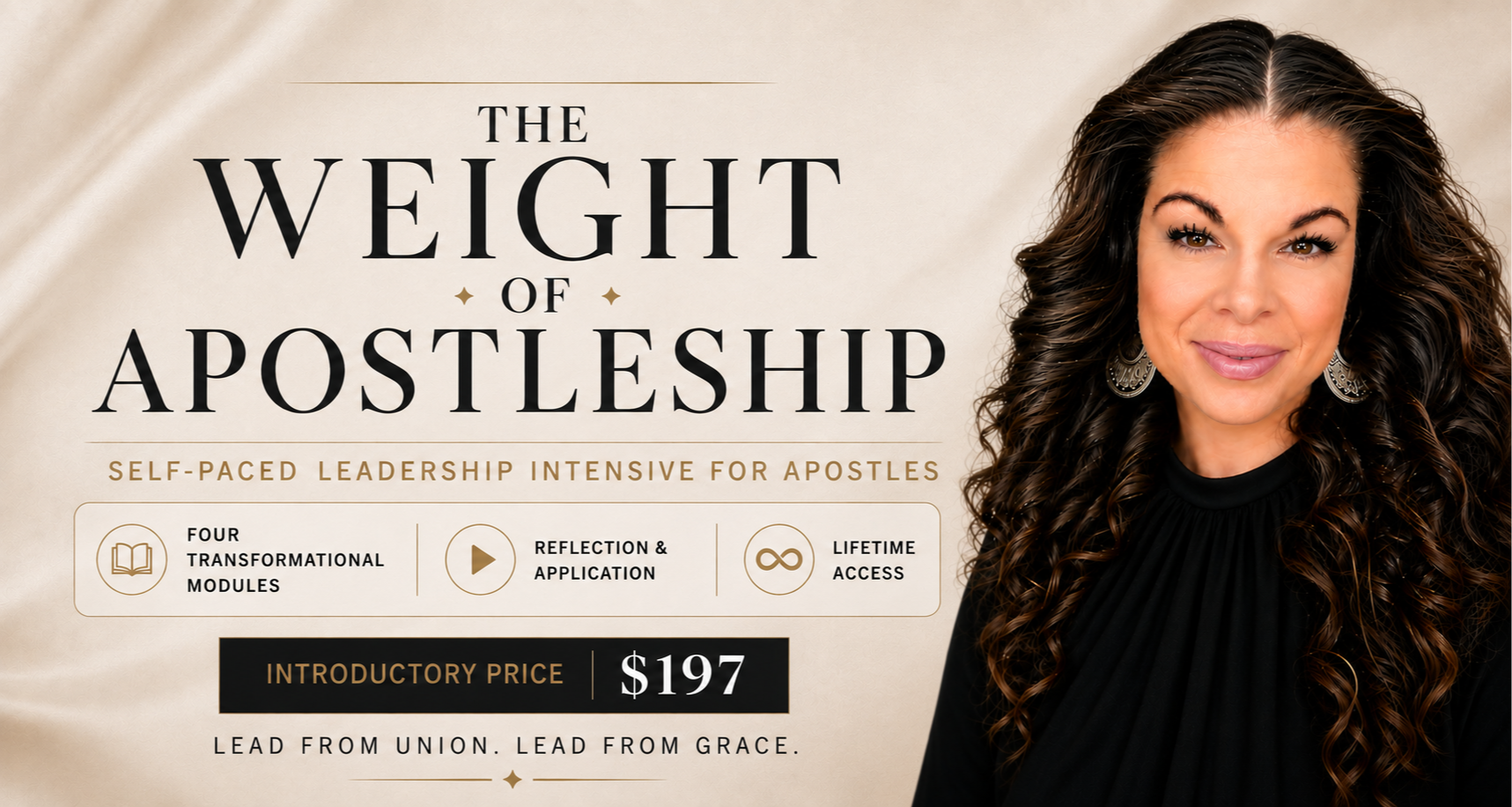
Self-Paced Four-Module Intensive
Begin Anytime • Move at Your Own Pace
Four transformational modules designed to expose unnecessary weight, recalibrate the place from which you lead, and return leadership to union and grace.
$197 Introductory Price
GET INSTANT ACCESSChrist Is Recalibrating the Way Apostles Lead.
What if you've spent years carrying responsibilities Christ never asked you to carry?
This intensive will help you distinguish between what Christ has entrusted to you and what leadership culture quietly taught you to carry. Many apostles have spent years building faithfully while carrying assumptions, pressures, and responsibilities that quietly became part of leadership. This intensive is an invitation to let Christ expose what was never yours to carry and recalibrate the place from which you lead.
THE LEADER BEFORE THE LEADERSHIP
Every assignment shapes two things: what you build and who you become while building it.Apostles often spend years focused on the people they equip, the systems they build, and the responsibilities entrusted to them. Yet leadership is also shaping the person behind the assignment.
Leadership has a way of reinforcing whatever we repeatedly practice. Pressure can become so familiar that it feels normal before we even recognize it. That is why Christ transforms the source of our leadership, not merely our methods.
When Christ reshapes the inner life, everything downstream begins to change. Discernment becomes clearer because it is no longer clouded by pressure. Responsibility no longer feels like a weight you carry alone. Correction flows from love rather than frustration, and authority becomes a place of safety instead of control.
The greatest work Christ wants to do through your leadership is the work He first desires to do within you.
WHAT CHANGES WHEN YOU LEAD FROM UNION?
Everything.
The revelation isn't that Christ changes your calling. It's that He changes what you've mistaken for leadership.
What Christ Wants to Recalibrate
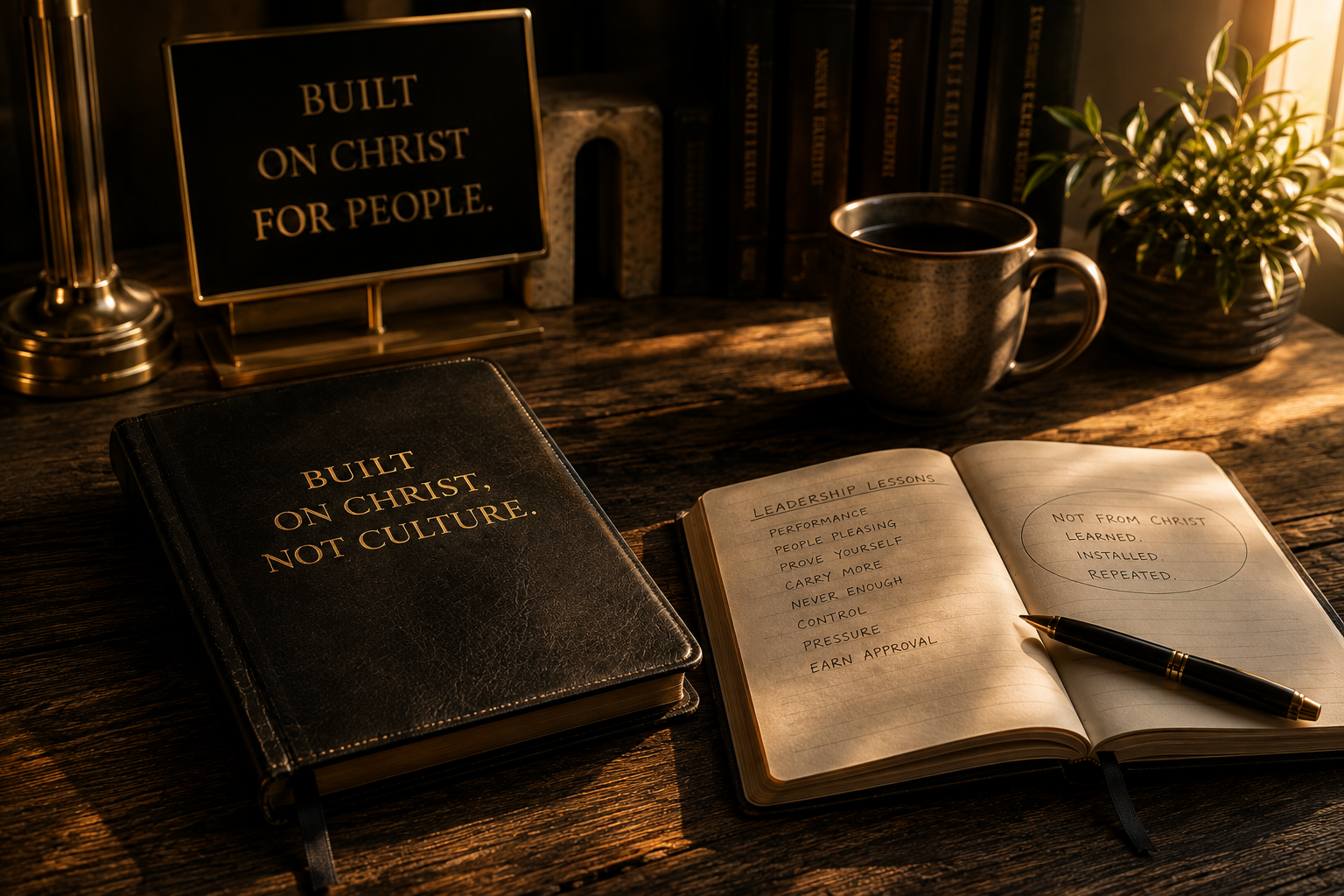
What Leadership Culture Quietly Taught You
Not everything you've learned about leadership came from Christ.
Unlearn What Was Never Yours to Carry

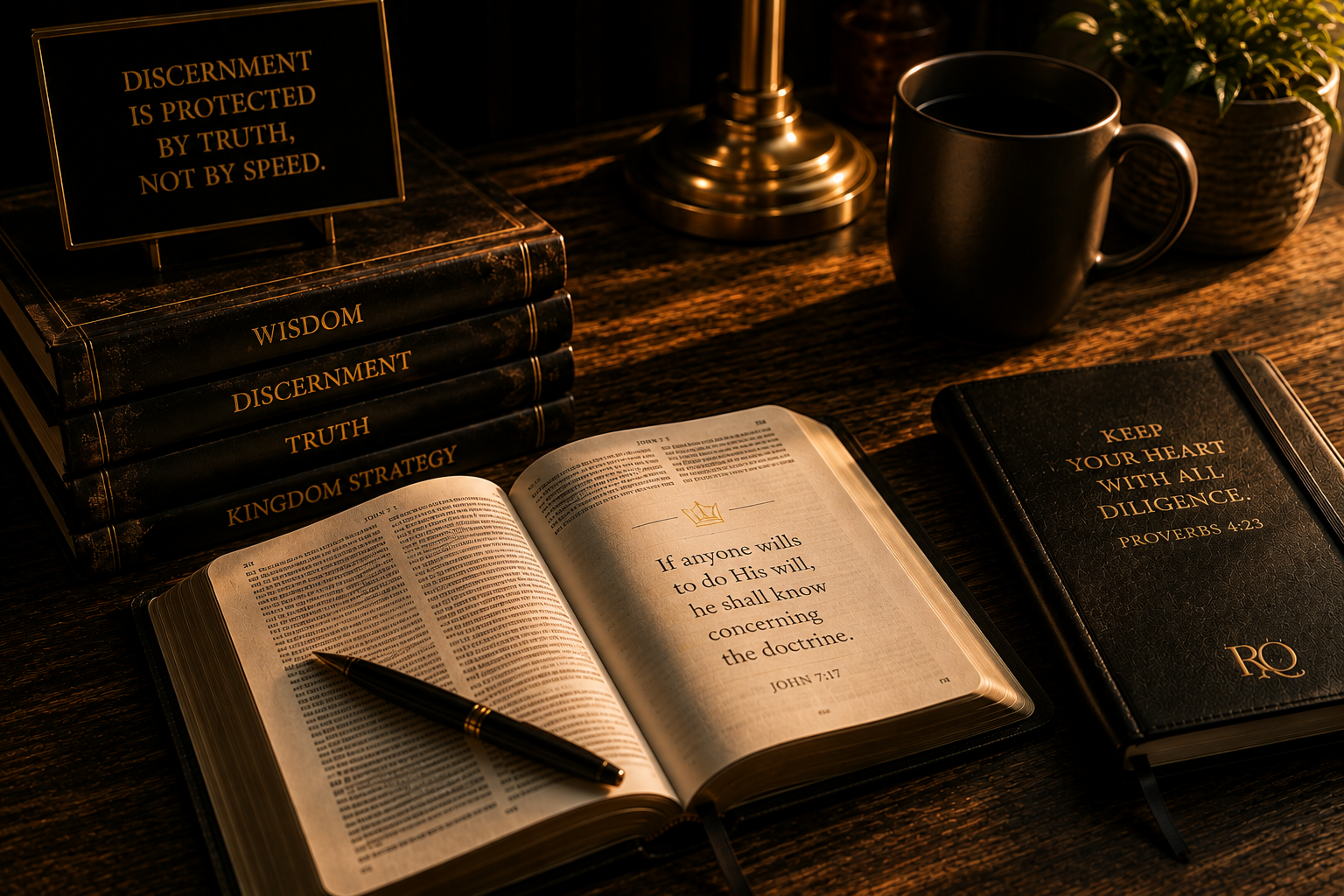
Recognize What's Been Missing
You can believe the finished work...
...while leading as though something is still left to prove.
It isn't deception.
It's believing you've already seen clearly.
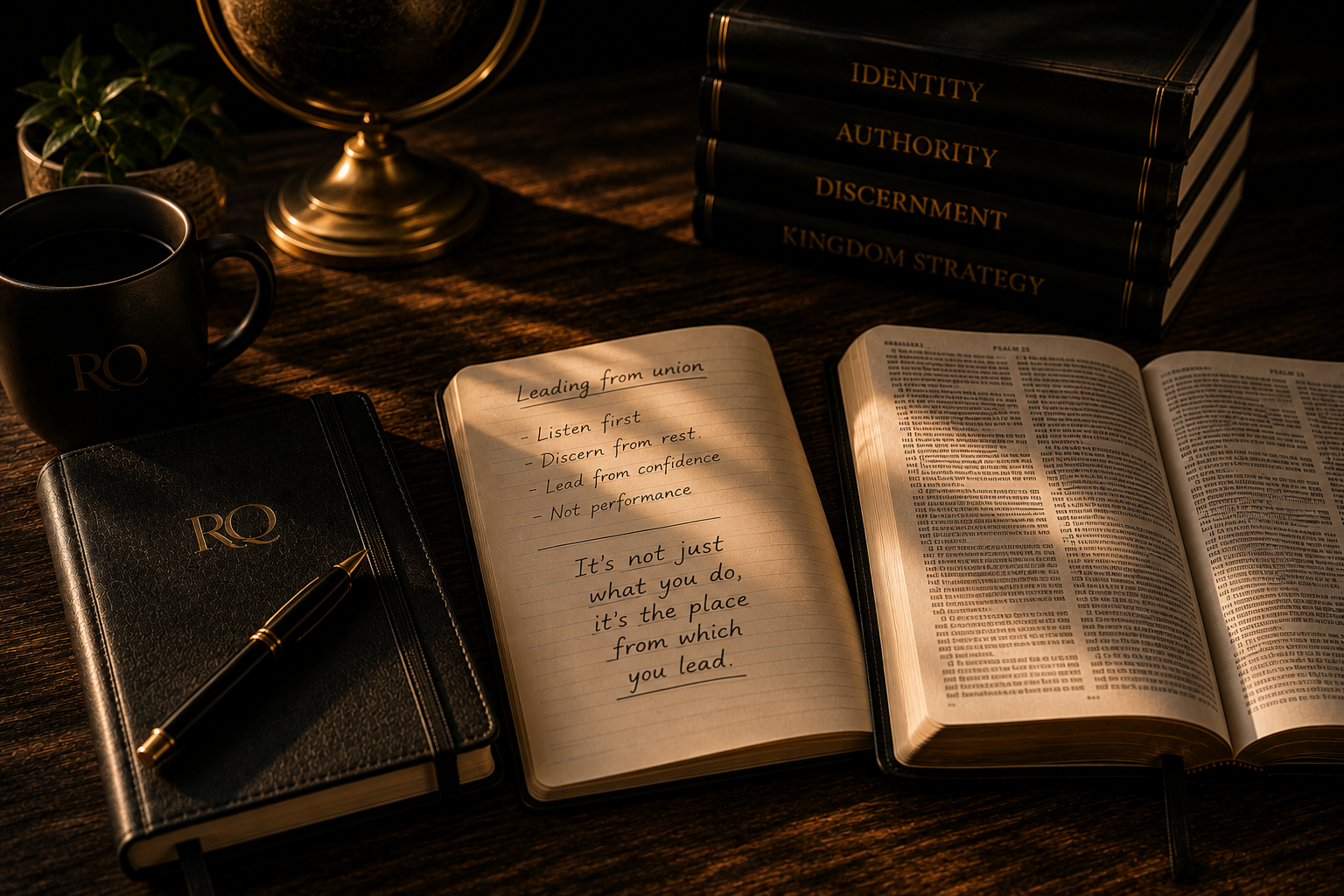
Discover why changing the place from which you lead changes every decision you make.
The strongest apostles are not those who carry the most. They are those who have learned to remain in Christ.
Why This Message Matters to Me
I didn't discover this by studying it.
I discovered it because I needed it.
For years, I loved Jesus, believed the finished work, and knew I was in Christ. Yet whenever responsibility increased, I quietly returned to pressure. I carried more than Christ had asked me to carry because I thought that was what faithfulness required.
Through Scripture, the Lord began exposing those patterns. He wasn't removing responsibility. He was teaching me to lead from a different place.
That recalibration changed the way I lead, teach, and build.
Everything you'll experience in this intensive grows out of what Christ first transformed in me.

Raquel Orona
Author • Speaker • Mentor
Founder, Fearless Rock Ministries
Founder, School of Kingdom Reformers
Raquel equips apostles, prophets, and Kingdom leaders through teaching, mentoring, leadership intensives, and the School of Kingdom Reformers. Her work is rooted in Scripture, centered on Christ, and grounded in the finished work of Jesus, helping leaders recognize where pressure, striving, and unhealthy responsibility have become attached to their assignment.
Through clear biblical teaching and practical recalibration, she helps leaders return to union, grace, sound judgment, and a healthier understanding of how Christ intended leadership to function.
The Lord wasn't asking me to become less responsible. He was teaching me to stop carrying what had never belonged to me in the first place.
YOUR FOUR-MODULE RECALIBRATION
As you move through these four modules, you'll recognize pressures you no longer noticed, assumptions you no longer questioned, and patterns that have quietly shaped the way you lead. Once those hidden places come into the light, you'll have the opportunity to lead from a different place.

When Burden Started Looking Like Obedience
You didn't wake up carrying too much. The weight accumulated one faithful decision at a time.
Recalibration: Discern what Christ entrusted and what leadership added.

When the Assignment Became Your Identity
It didn't happen all at once.Responsibility slowly became more familiar than communion.
Recalibration: Return to living as a son before leading as a builder.

What Was Building You While You Were Building
You didn't realize leadership was discipling you.Every decision reinforced a way of leading.
Recalibration: Let Christ reshape the instincts from which you lead.

Serving Christ Isn't the Same as Leading Like Him
You can faithfully serve Christ...
...and still carry leadership in ways He never intended.
Recalibration: Discover the difference.
Why This Changes More Than Your Leadership
Because Christ isn't refining your methods.
He's recalibrating the person using them.

The Assumptions You Never Questioned
Some things feel biblical simply because you've practiced them for years.

The Weight You Were Never Meant to Carry
Faithfulness and carrying more were never the same thing.
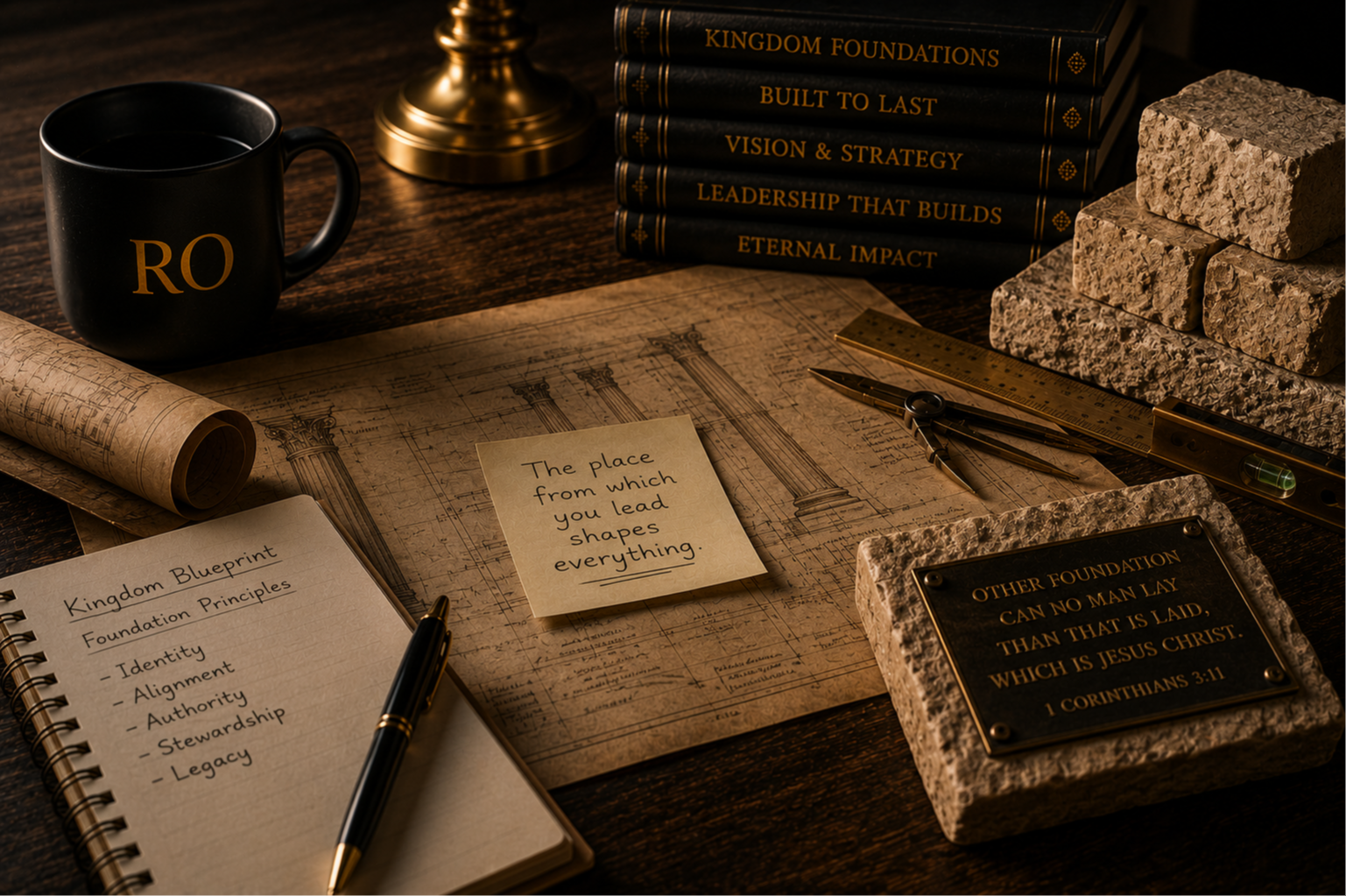
The Place From Which You Lead
Discover how union changes the way you respond, decide, correct, and build.

Healthy leadership doesn't begin with better methods.t begins with a different source.
Investment
What’s Included
✓ Four self-paced transformational teaching modules
✓ Approximately one hour of focused teaching in each module
✓ Guided reflection questions and practical application
✓ Digital copy of the Seated, Not Striving Workbook
✓ Bonus Case Study: Paul: Anchored in Union
✓ Personal processing exercises designed to expose pressure, false responsibility, and misalignment
✓ Biblical recalibration around leadership, grace, union, and responsibility
✓ Lifetime access so you can revisit the teachings at your own pace
Introductory Tuition
$197
This self-paced intensive gives you the space to move through each module without rushing the process. As you work through the teachings, reflection questions, workbook material, and case study, you’ll be able to examine where pressure, striving, and misplaced responsibility have shaped the way you lead.
The goal is deeper alignment with Christ, clearer leadership, and a healthier expression of apostleship that flows from union and grace.
Begin anytime. Move at your own pace. Revisit the material whenever you need it.
GET INSTANT ACCESSFREQUENTLY ASKED QUESTIONS
Is this intensive live?
How quickly do I need to complete the intensive?
Is this only for apostles?
What is included?
Is this teaching based on Scripture?
Do I need to watch the modules in order?
Will I be able to ask Raquel questions?
Is there a payment plan?
The Way You Lead Matters
The place from which you lead will shape what you build and influence the people entrusted to you. If Christ is bringing hidden pressure into the light, this intensive gives you the space and teaching to recognize what has become unnecessarily heavy and respond to what He is revealing.
Begin The Weight of Apostleship today and return to leadership that flows from union and grace.
GET INSTANT ACCESS